The Five-Star Plumber
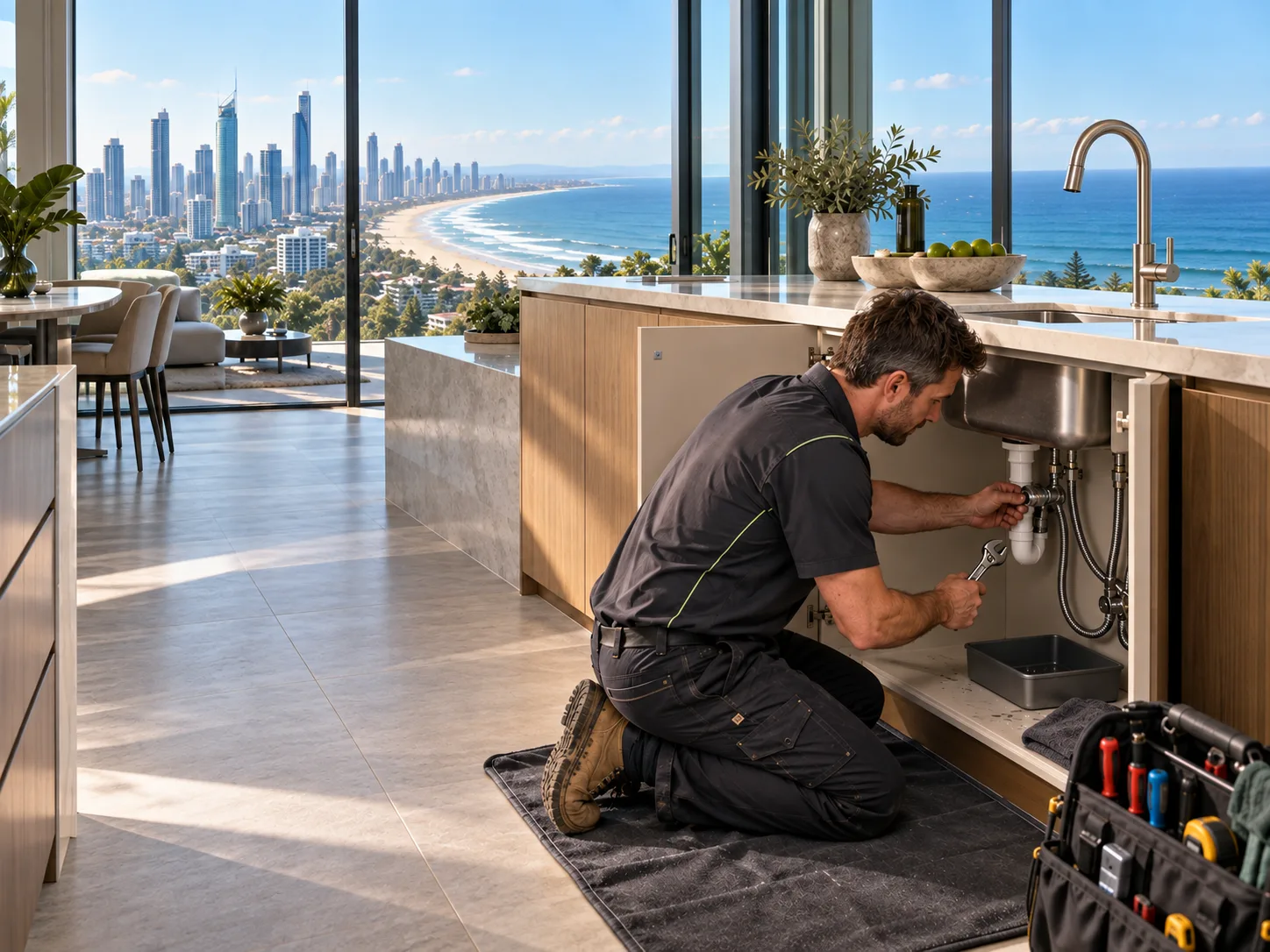
There are certain things a guest will forgive.
A cushion may not be perfectly plumped. The weather might refuse to cooperate. The promised ocean glimpse may require a slightly more enthusiastic lean from the balcony.
But no hot water? A blocked toilet? A shower drain slowly turning the bathroom into an indoor pool?
That is when goodwill disappears down the plughole.
For a short-stay host, plumbing is not simply a maintenance issue. It is part of the guest experience, sitting somewhere between clean linen and a reliable Wi-Fi connection. Nobody mentions it when it works. When it fails, it can dominate the stay, the messages and, eventually, the review.
Small problem, very public consequence
A dripping tap seems harmless in an empty property. At two o’clock in the morning, in an unfamiliar bedroom, it can become the loudest object in Queensland.
The same is true of slow drains, temperamental hot-water systems, weak water pressure and toilets that require a particular, almost ceremonial technique to flush. Owners and regular cleaners may learn to live around these quirks. Guests have neither the knowledge nor the patience.
They have paid for a functioning property. Fair enough.
This is why a good short-stay plumber does more than repair pipes. They understand urgency, access and the cost of disruption. They know that “we’ll come sometime Tuesday” is not especially useful when a family of six checked in on Monday night.
The best plumber is not necessarily the one with the fastest wrench. It is the one who can diagnose the problem properly, communicate clearly and find the least disruptive solution while guests are still in residence.
Speed matters, but judgement matters more
An emergency callout can be expensive. A mishandled emergency can cost considerably more.
There may be a refund, alternative accommodation, additional cleaning, damaged flooring and several hours of increasingly tense communication. Then comes the review, preserved online long after the pipe itself has been repaired.
A capable plumber helps the host make sensible decisions quickly:
Is the property safe to occupy? Can the problem be isolated without shutting down the entire house? Is there a reliable temporary solution? Does the guest need to be relocated? What caused the fault, and is it likely to happen again? Can photographs and a clear report be supplied for the owner, insurer or body corporate?
This is where a trusted relationship becomes invaluable. The plumber already knows the property, understands where the isolation valves are and can gain access without requiring the host to abandon dinner and drive across the city carrying a mysterious ring of keys.
Prevention is cheaper than apology
The most useful plumbing visit often happens before anything has gone dramatically wrong.
Short-stay properties experience concentrated use. Showers run one after another. Kitchens are used by people unfamiliar with the appliances. Children experiment with what will fit down a drain. Guests arrive from different countries with different assumptions about what can be flushed.
Routine inspections can identify slow drainage, failing seals, loose fittings, corrosion, inconsistent water temperature and hot-water systems approaching the end of their useful lives.
It is not glamorous work. Neither is explaining to twelve wedding guests why the house has run out of hot water.
A sensible preventative schedule should include:
Testing taps, toilets and water pressure Checking beneath sinks and vanities for moisture Inspecting flexible hoses and visible seals Clearing slow drains before they become blockages Servicing hot-water systems as recommended Confirming isolation valves are accessible and labelled Recording the location of water mains and shut-offs Reviewing whether the system can handle the property’s actual guest capacity
That final point matters. A house styled to sleep ten people must also function for ten people. An additional sofa bed may increase occupancy on the listing, but it does not increase the hot-water cylinder.
Build the relationship before the emergency
The worst time to begin searching for a plumber is while water is entering the ceiling.
Every host or property manager should have a verified plumber saved before the property goes live. Confirm their service area, trading hours, after-hours availability, callout fees and preferred access arrangements. Provide accurate property notes and make sure someone can approve urgent work without a three-hour chain of messages.
A strong trade partner should also understand the delicate balance between protecting the property and respecting the guest. They arrive professionally, explain what is happening without creating unnecessary alarm, contain the work area and leave the room ready for the cleaning team.
The repair may take twenty minutes. The impression it leaves can last much longer.
The rating is won in the response
Guests do not always punish a property because something failed. Buildings contain moving parts, water and occasionally questionable decisions made during renovations. Things happen.
What guests remember is how the problem was handled.
A quick acknowledgement, a competent plumber and honest communication can transform a potential disaster into evidence that the host genuinely cares. In some cases, the recovery becomes more memorable than the fault.
That is the quiet value of a good plumber. They protect the building, certainly. But they also protect the stay, the host’s reputation and the little row of stars on which the next booking may depend.